Shopping Malls in Japan
Mall sales in Japan are still growing — but development has collapsed. Closures now outpace openings, construction costs are prohibitive, and the sector is polarising between flagship urban malls serving tourists and wealthy urbanites, and supermarket-anchored neighbourhood centres serving everyone else.
Is Japan’s mall sector growing or shrinking?
Both, depending on what you measure. Total mall sales rose 4.2% in FY2024 (5.8% like-for-like), but much of that growth reflects inflation rather than real volume. Meanwhile the sector is physically contracting: only 18 new facilities opened in 2025 — a 50% drop on the previous year — against 29 closures. Japan now has 5% fewer malls than at the 2018 peak, and the 2026 pipeline of 23 planned openings is the second-lowest on record, most of them small.
The brake on development is cost: planned construction costs for retail companies are 10% higher than in 2020, compounded by chronic labour shortages. Large-scale suburban mall development has become prohibitively expensive for all but the best locations.
Who are the winners?
- Station and transport-hub malls dominate efficiency: against a national average sales density of about ¥49,658 per sqm/month, prime transport locations command over ¥200,000. Narita Airport’s terminals topped the ranking at ¥382,025 per sqm/month, with sales recovering close to pre-Covid peaks.
- Experiential urban malls — Parco Shibuya posted a 22.5% sales increase on top of the previous year’s 57.3% surge, on a mix of luxury, anime and subculture zones and dining that draws tourists and young domestic consumers alike. Parco topped the developer growth ranking.
- The biggest malls — the top 100 generated ¥4.07 trillion, 14.5% of sector sales from just 8.5% of mall floor space. Mitsui Fudosan dominates the ranking with 28 malls, followed by JR East with 14. Lucua in Osaka (+17.5%, over ¥100 billion) is now Japan’s largest station mall.
How is the mall model changing?
The tenant mix tells the story: merchandise retail now accounts for 61.1% of tenants in major malls, down 3.4 points in a decade, while services — dining, beauty, entertainment — have risen to 20.7%. Development is shifting to smaller neighbourhood centres anchored by supermarkets: Aeon’s urban Soyora format, Daiwa House repurposing distressed malls, and discounters like Lopia and Trial opening their own one-stop facilities. For the mid-sized, undifferentiated suburban mall, the outlook is increasingly bleak.
What’s the outlook?
FY2025 sales at leading malls continued to rise (+6.2% April–October at major city-centre facilities), but headwinds are building: precarious inbound tourist demand, stagnant real wages, and inflation squeezing household budgets. The sector is settling into a new structure — a handful of flagship urban malls, targeted regional consolidation by Aeon and Mitsui, and a long tail of functional neighbourhood centres serving an ageing population.
The full analysis: Japanese Shopping Malls
JapanConsuming’s shopping-mall coverage is the complete dataset and analysis behind this overview — the Top 100 mall ranking, fastest-growing centres, the development pipeline, long-run sector data and developer performance. All reports are available to Enterprise subscribers of JapanConsuming.
In the report
- Complete Top 100 mall ranking: sales, sales space, tenants, densities
- Fastest-growing malls and what drives them
- Development pipeline: every key opening and closure through 2026
- Long-run sector data: mall numbers, sizes and sales, 2001–2025
- Developer performance: Mitsui, JR East, Parco, Aeon and more

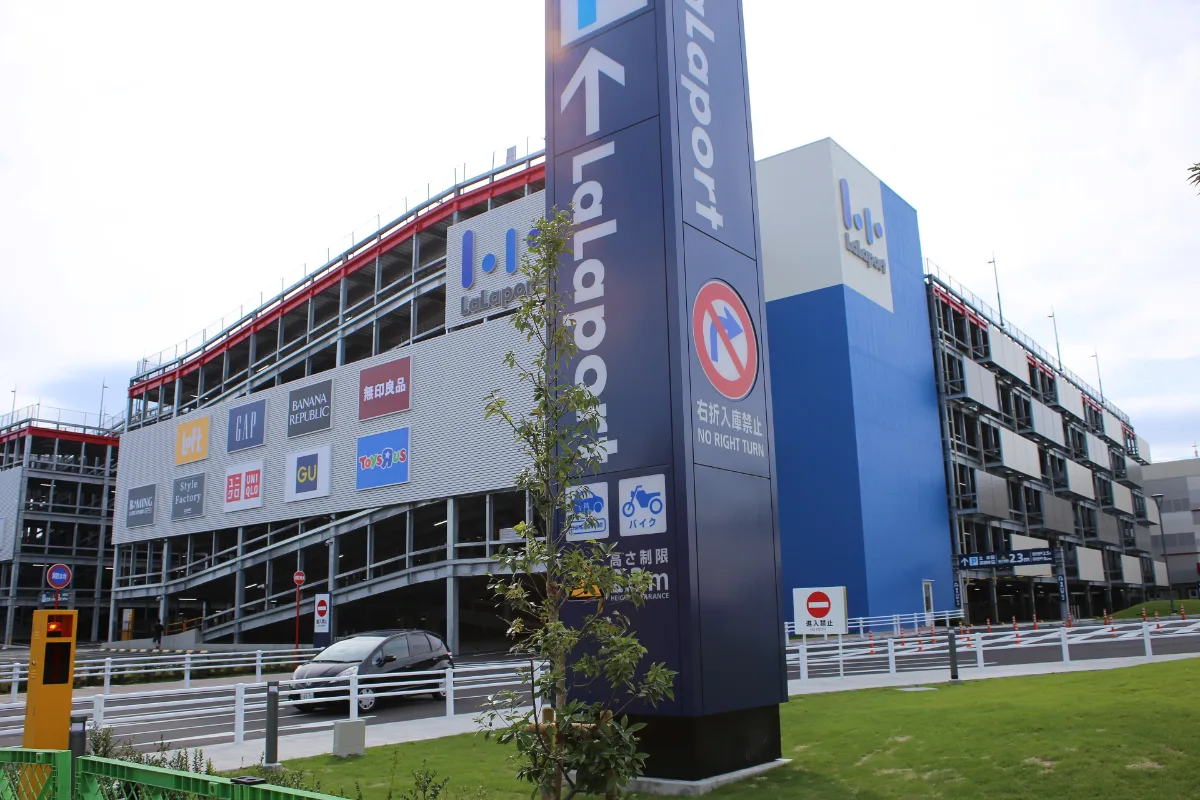
- Cover: Lalaport Nagoya Minato — via Wikimedia Commons.