
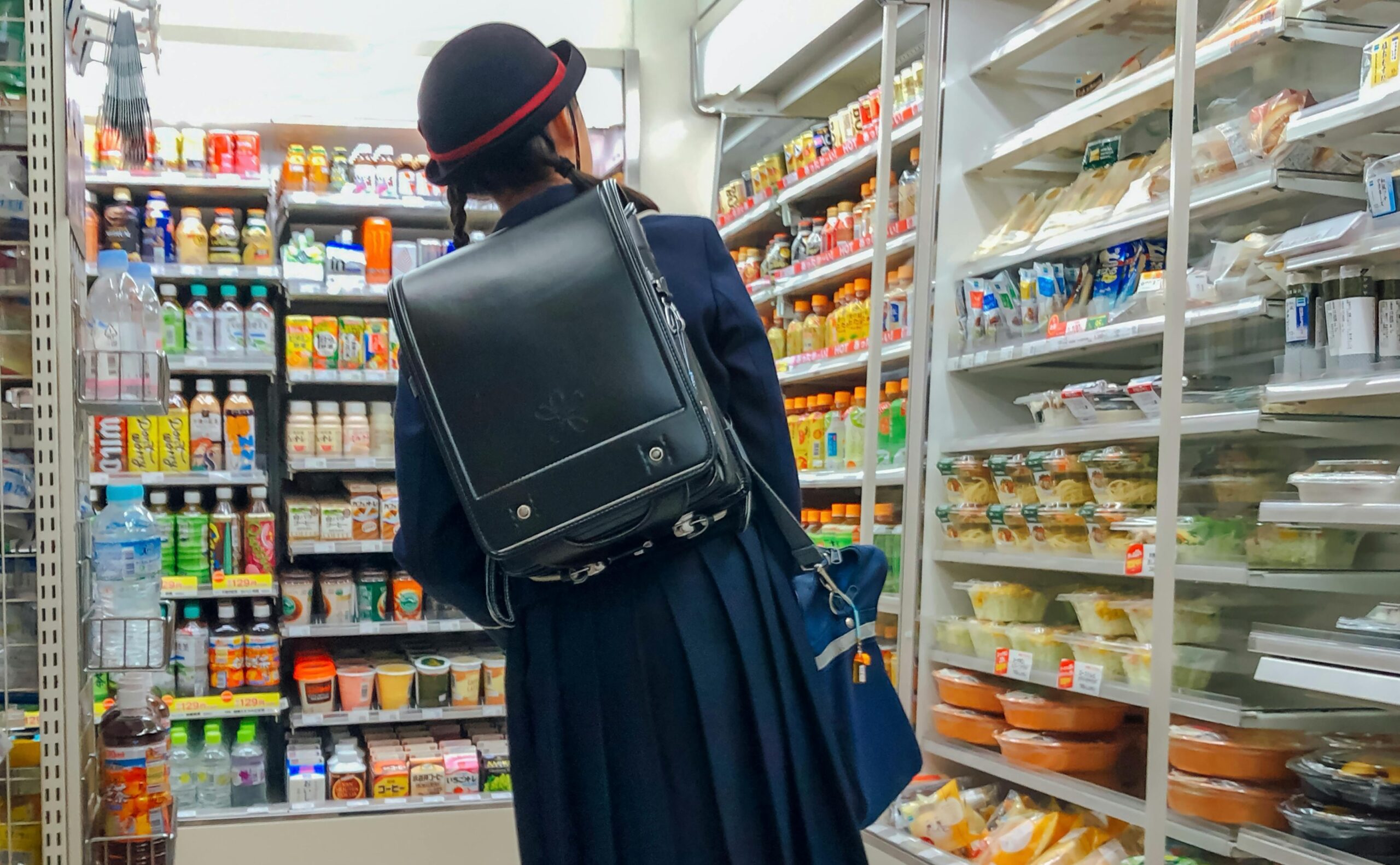
Convenience Stores in Japan
What exactly is a convenience store?
Until about 20 years ago, Japanese retail was defined by an overwhelming number of mom-and-pop (independent) stores – and there are still plenty of these around. Today, though, convenience stores or ‘konbini’ (コンビニ) are more symbolic.
While independent retailers have operated since the dawn of time – and in Japan’s case, some are several hundred years old – the first convenience store appeared in Japan in the early 1970s. Several companies claim to be the first, but FamilyMart opened its first store in Saitama in September 1973, while the first Seven Eleven, franchised at the time by the US founders, opened just eight months later in Koto-ku, Tokyo. Lawson opened its first store in April 1975.
Defining a convenience store in Japan
In the formal sense, a Japanese convenience store is a small-format (about 100 sqm in most cases), food-focused chain retailer. The sector is defined by a number of key factors:
- Ubiquity: There are 56,000 convenience stores in Japan. The major chains deliberately attempt to saturate local areas with stores, and individual stores generally serve catchments of just 500 metres.
- Franchise Operations: almost all of the major chains are franchises. The franchise HQs organise store fit, branding, and merchandise planning and supply. Franchisees have some say in merchandising – but not much – and are mostly responsible for day-to-day store operations, notably hiring and managing part-time staff. Franchisees pay a healthy royalty based on store profits, and convenience store franchise headquarters are among Japan’s most profitable retailers.
- 24-7 operation: all the big chains expect their stores to operate 24-7, a feature that has become something of a cost burden on less successful stores.
- Standardisation: by operating very uniform stores as franchise chains, the big operators achieve multiple economies of scale, replication and scope. This also leads most stores to look and feel very uniform, not only in branding and layout but also in the assortment on offer.
- Literal Convenience: Stores are in easy walking distance for most of Japan’s population, or serve specific markets along major highways, in stations, near residential housing, or near office areas. Most stores carry 2,500-3,000 SKUs, with approximately 50-70% in food – consisting of fast and packaged foods almost entirely. Stores are well known for their ‘counter’ foods, which form a major USP for each chain but almost always include coffee and other drinks and, at least in winter, oden. The remainder consists of entertainment and basic and emergency items, such as clothing, toiletries, household items, and stationery. Stores also provide a wide range of services, including parcel drop-off and pickup, utility and other bill payments, ticket sales, insurance and other services, photocopying and printing, and ATMs.
- IT and other technology: Every convenience store run by the larger chains has a data link back to HQ that tracks sales and inventory in real time. Chains routinely record the time of each purchase and use various methods to record each customer’s age and gender, nowadays usually by tracking customer interactions through apps or loyalty cards. Recent developments include the widespread introduction of in-store media and customer movement tracking, a growing number of unmanned stores, and the use of various technologies to reduce reliance on labour.
- Sophisticated Logistics: The standard model for all major chains is to replenish every store at least three times a day, with deliveries timed just before peak sales periods. Stores aim to sell out of very fast-moving perishable foods three times every 24 hours, with less perishable items being topped up once a day or just a couple of times a week. The majority of deliveries are made through a network of cross-docking distribution centres, which also commonly house fast-food preparation factories in the same building.
Leading Convenience Store Chains by Sales
Overall, convenience stores are the third largest retail format by sales, after GMS/supermarkets and e-commerce. However, among leading retailers with sales over JPY 250 billion, it is the largest single channel in terms of sales. In addition, convenience stores sell more food than any other channel, and no supermarket can match the food sales of any of the three largest convenience store companies.
The convenience store sector is one of the most concentrated retail sectors in Japan. Despite its large size, only three companies dominate, with roughly 90% of both sales and stores.
Major players in the Japanese Convenience Store Sector

Seven Eleven Japan
Seven Eleven Japan is owned by Seven & I Holdings. It is the world’s largest convenience store operation, with 7-Eleven, Inc. also owned by Seven & I and operating separately in the USA, with franchises and directly operated stores in other territories worldwide. Seven Eleven is by far Japan’s largest convenience store. It has led the sector for the past five decades, becoming the single largest retail chain by sales in 2000 and remaining so today. Gross franchise sales totalled over ¥5.3 trillion in FY2024 across more than 21,700 stores nationwide, and the franchise operating company is among Japan’s most profitable. The company is known for its high level of innovation, leading the sector through the introduction of new product ranges and services.
FamilyMart
FamilyMart is Japan’s second-largest convenience store chain with over 16,000 stores nationwide and gross franchise sales of over ¥3.2 trillion. The company originated as part of the (which is defunct) Seibu retail empire, but today is majority-owned by Itochu Shoji, with the CEO and senior managers seconded from the sogo shosha’s ranks. The chain has recently been diversifying, investing heavily in retail media and finding remarkable success through its Convenience Wear lines of basic clothing items – Itochu is a major player in Japanese fashion.


Lawson
Lawson is the third-largest convenience store chain, but it has been the most profitable operator for the past two years thanks to a refocus on existing store improvements and well-targeted merchandising. Lawson originated as part of the Daiei Group (now owned by Aeon) and was acquired by Mitsubishi Shoji before Mitsubishi sold a 50% share in the company to telecom and technology giant KDDI in 2024. Lawson’s total gross sales in FY2024 exceeded ¥2.5 trillion across 14,600 stores.
JapanConsuming Snapshot Report
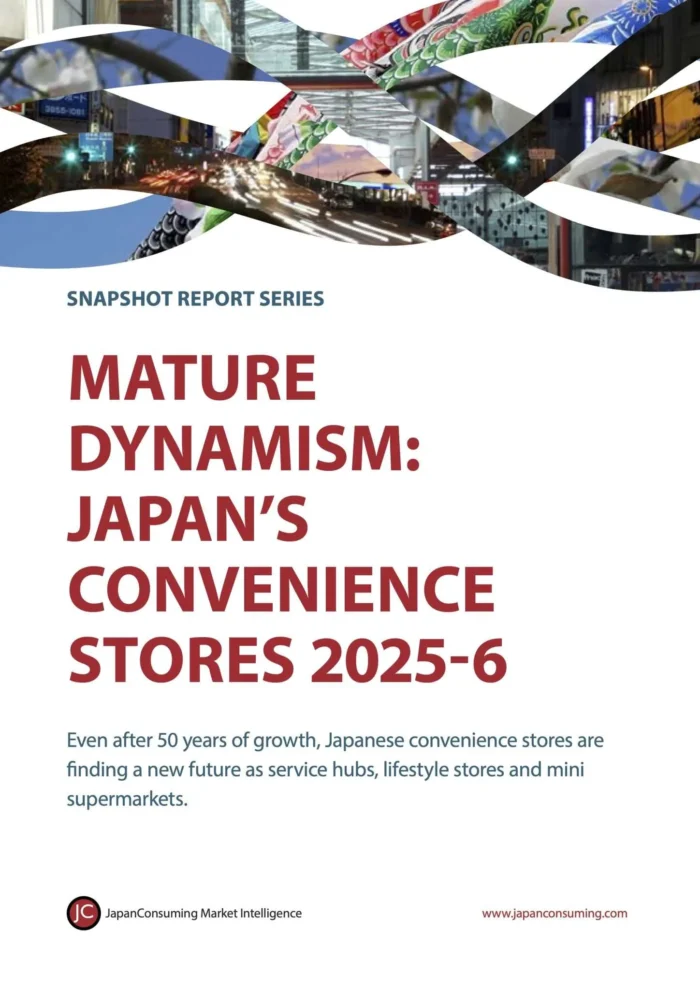
Mature Dynamism: Japan’s Convenience Stores 2025-6
Japanese Convenience Stores is a 30-page report offering a quick but complete review of the convenience store sector, including future trends, strategies of leading operators, and rankings of the top firms and stores.
The report provides a snapshot update on the latest trends in Japanese convenience store retailing:
- The dominance of the top 3 firms, Seven Eleven, Lawson and Familymart
- The continuing survival of smaller operators like Seicomart
- Stagnation in store numbers, but innovation within
- Revenue and profit growth through new merchandising and services like retail media
- Rankings for the sector, by company, performance across KPIsWith Japanese
- Convenience Stores, you will quickly understand what the leaders are doing to innovate, where the sector is heading, and where the opportunities lie, whether as a supplier, competitor, or investor.
All reports are available to Enterprise subscribers of JapanConsuming.
Buy our annual Convenience Store Report today
Full Table of Contents:
- Data overview: growing but slowing
- CVS Sales by Category
- Regional Performance Divergence
- Headquarters and Chain Performance
- Competitive Dynamics and Market Share
- Geographical coverage for major chains
- The State of the Market
- Emerging Growth Strategies: Beyond the Sales Floor
- Last-Mile Delivery Services
- Retail Media and Digital Engagement
- In-Store Innovation and Product Strategy
- Store Modernisation and Automation
- Conclusion: Three Companies, Three Futures
List of Charts:
- Convenience Store Sector Sales, FY1997-2024
- Convenience Store Sector: Sales per Store per Day Average, FY1997-2024
- Convenience Store Sector: Total Store Numbers, FY1997-2024
- Convenience Store Sector: Sales of Fast Food, FY1997-2024
- Convenience Store Sector: Sales of Processed & Packaged Foods, FY1997-2024
- Convenience Store Sector: Sales of Non-Foods, FY1997-2024
- Convenience Store Sector: Sales of Services, FY1997-2024
- CVS Performance by Region, FY2023-2024
- CVS Franchise HQ Performance, FY2024
- CVS Chain Performance: Gross Sales, FY2024
- CVS Chain Performance, Stores and Sales Metrics, FY2024
- CVS Leading Chains Store Performance Metrics, FY2024-2025
- Seven Eleven Store Numbers and Store Share by Prefecture, August 2025
- Familymart Store Numbers and Store Share by Prefecture, August 2025
- Lawson Store Numbers and Store Share by Prefecture, August 2025
- Minor Chain Store Numbers and Store Share by Prefecture, August 2025
- Net Store Number Changes by Major Chain, 12 months to August 2025
- Domestic Frozen Food Consumption, 2014-2024
- ATMs by Provider Type, 2012-2024
Author:
Roy Larke is an academic and researcher. He co-founded JapanConsuming.com in 2000 and has worked in Japan for most of the past 30 years, researching Japanese retail and consumer markets.

Image Credits:
- Cover image source: Photo by Zhenxing Cai
- Company logos:

.svg#/media/%E3%83%95%E3%82%A1%E3%82%A4%E3%83%AB:FamilyMart_Logo_(2016-).svg"><img src="https://upload.wikimedia.org/wikipedia/commons/3/31/FamilyMart_Logo_%282016-%29.svg" alt="FamilyMart Logo (2016-).svg" height="86" width="592"></a><br>FamilyMart Co.,Ltd. - <a rel="nofollow" class="external free" href="http://www.fu-hd.com/ir/library/annual/document/fm/fm2016.pdf">http://www.fu-hd.com/ir/library/annual/document/fm/fm2016.pdf</a>, パブリック・ドメイン, <a href="https://commons.wikimedia.org/w/index.php?curid=51062564">リンク</a>による</p>)
